
Report into Third Sector Trends in North East England
North East Third Sector Trends
Snapshot of the Regions
At a glance
The sector in North East England

7134
registered charities and community groups in North East England

37,500
employees

149,000
regular volunteers

£1.98bn
annual turnover

£7.68bn
per annum total financial value of the sector
Per capita KPIs by North East Local Authority
Across all indicators it’s clear that the sector is substantially more robust in Tyne and Wear, Northumberland and County Durham than in the Tees Valley Area, and that when Tees Valley is excluded, figures in the rest of the North East are broadly in line with the median for England and Wales. It is clear there is a need for renewed policy focus on investing in and strengthening Civil Society in the Tees Valley.
There is also an interesting picture in the strength of the sector in Northumberland; this would require further analysis to assess if this strength is related to its relative affluence, its rurality and reliance on charity to provide reach and services across a more dispersed population, or for other reasons. There isn’t any clear anomaly suggesting a higher density of organisations in Newcastle as the regional centre (unlike London in the national figures) but this may be because relative cost benefits of spaces in other parts of the region means regional charities are not necessarily operating out of Newcastle.
Partnerships
Current picture of partnership working by region
Number of TSOs by Local Authority North East
Partnership working change over time North East
The North East has a very strong culture of partnership working compared to other regions; this likely reflects the strength of the sector’s infrastructure and its value in facilitating and convening, as well as the strong emphasis on tackling critical social need.
Public Sector Relationships
The sector does however have a more negative view of its relationships with the local public sector than in other regions and compared to the national average. The trajectory on this broadly mirrors the national pattern, with organisations still feeling valued, but feeling less positively engaged than in recent years. It is clear that local and regional policy-makers need to commit to embracing the Civil Society Covenant, and to making this meaningful for local charities and community groups.
Public sector relationships current by region
Public sector relationship change over time North East
Commissioning and Procurement
Analysis of the data shows the North East has the highest proportion of organisations involved in bidding for or delivering public sector contracts of any region but, as with across England and Wales, it has fallen steeply in recent years. This needs to be carefully considered by policymakers wanting to engage Civil Society, and a probable need to investigate why organisations are opting out of the market and what practices need to be reviewed at local level to make involvement of charities a viable prospect.
Bidding and contracting change over time by region
Bidding and contracting change over time North East
Influencing and Campaigning
The sector in the North East is far more proactive in its engagement with policymakers than nationally, more likely to attend meetings, and say they campaign or lobby local systems and leaders to push for change; this proactive mindset may account for the slightly more negative view of the local public sector, as we have high expectations and strong ambition for our communities and the people we support.
It’s notable however, that we are also more positive about trusting sector infrastructure to campaign on our behalf, and this again indicates the strength and value of our regional infrastructure.
Campaigning and Influencing change over time North East
Devolution
Like the rest of the country, we are still ambivalent about whether devolution has had a positive impact; if anything, we are even more “yet to be convinced”, and a very high rate of respondents feeling they are being asked to do more to help improve engagement with local people. It’s important in building trust that Civil Society feels the benefit of devolution and is properly resourced to facilitate engagement with local communities.
Views on devolution North East
Sources of Income
The regions’ reliance on different income streams is continuing to shift; we can see again contracts becoming less important, and investment income and subscriptions having substantially reduced as a proportion of the funding mix.
Whilst other forms of income continue to hold steady, there is no doubt that grants are not only the most important income source, but increasingly so. There is the potential this will continue to increase competition for funds and pressure on grant-makers in the region, and something both funders and delivery organisations should be sanguine about being prepared for.
Proportion of income which is earned change over time North East
The earned income trajectory shows an interesting picture of a decrease in both those organisations earning no income, and those earning a majority of their income, but an increase in those a modest proportion. This may reflect the trend of organisations diversifying income streams to strengthen their sustainability.
Support from Business
The North East is clearly bucking the national trend, with support from business in all its forms holding steady over time and financial support actually increasing in recent years. This is an excellent reflection on the close connection our business community has with people and local communities. There is still clear potential to grow support from business more, and this is something we will continue to look to do.
Relationship with business change over time North East
Support from business by region
Grant-making Practice
Grant-making Practice
Compared to the national data, the North East has experienced the same Covid “bump” but overall, the region is most likely to report positive experiences of grant-making practice around wider support and taking time to build a relationship, and score above average on access to unrestricted funding. However, we also report higher than average rates of being asked for “innovation”, which is something grant-makers in the region may want to reflect on as they consider best practice as funders.
Employees
Recruitment and retention of staff easier or harder by region
As a region, we appear to be finding recruitment and retention of staff harder than other parts of the country, and certainly the perception among charitable organisations is that it continues to become more difficult. Off the back of the pandemic, we saw labour-force shortages creating problems in multiple industries, but as the employment market cools, with fewer vacancies and a creeping unemployment rate, we may find this begins to change, although we know there are challenges for our sector around being able to offer comparable terms and conditions, and finding people with the right experience and qualifications. The wider need to invest in the sector, and organisations to invest in themselves, are important considerations here.
needs infographic
Workforce Development
It’s clear that we might struggle with recruitment and retention, but we also perform poorly on how much we invest in our staff in relation to the national figures; we are more likely to offer training, support and flexible working for volunteers but less so for staff.
Volunteers
Recruitment and retention of volunteers easier or harder by region
The North East is broadly experiencing the same challenges as other regions with recruiting and retaining volunteers; they feel this is becoming harder, and in line with England and Wales as a whole, 39% report regular volunteering has not bounced back since Covid. Whilst we will not be able to confirm this trend until 2028, it is highly likely that we are seeing a confluence of economic and demographic factors reducing the volunteering pool and capacity across Civil Society, and this is a potentially serious challenge for the sector to get to grips with in the coming years, given that responses show charitable organisations consider regular volunteers to be more critical than ever.
Reliance on volunteers change over time North East
Governance
The North East also reports increasing challenges in recruiting and retaining trustees, whilst changing patterns of characteristics of sector leaders mirror the national picture, with any real stories, trends or explanations difficult to infer from the data available.
Recruitment and retention of trustees easier or harder by region
Demographics of chairs change over time North East
Sources of organisational support by theme North East
Holding and use of reserves change over time North East
Further positive reflections of our sector infrastructure and relationships with business are found in where we look for support around governance issues. Across all themes, North East organisations are more likely to access support from LIOs and the like, and also from the local private sector, and less likely to take a DIY approach. However, whilst the difference is not significant, we are less likely to access support from our local public sector, further confirming that for our region, it is this connection which is the weakest link.
There is also a greater level of professionalism reflected in the fact that we are more likely to consider organisational development needs a priority than other regions, across all six themes covered in the survey; like the rest of the country “Income Generation” comes out top, highlighting further the tendency to hyper-focus on funding, but with a more sanguine view of the importance of other aspects of charity management; volunteers, trustee development, business planning, digital skills and AI.
Financial Wellbeing

19.4% of organisations state they don’t have any reserves, down from 22.1% in 2019.
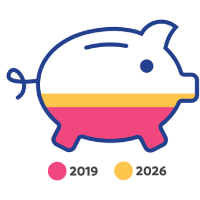
42.0% of organisations have not drawn on their reserves in the last year, up from 37.4% in 2019.

27.9% of organisations have drawn on their reserves to meet core costs in the last year, the same as in 2019

A minority of organisations (17.9%) have invested reserves into new activities, down from 21.5% in 2019
Our overarching narrative asserts the sector in the North East is more focused on tackling social need, and these organisations are more vulnerable across the piste. This holds up in the data about use of reserves; more North East charities don’t have reserves, fewer have left them untouched, and slightly more have drawn on reserves for core costs in the last year than the equivalent figures for England and Wales.
However, what the data does show is a far more entrepreneurial sector; North East charities are among the most likely to use reserves to invest in new activities, and have become more willing to invest since 2022, albeit that we are still below pre-pandemic levels for this.
Attitudes and Outlook
Future predictions, North East England, 2025
In the next two years we expect that
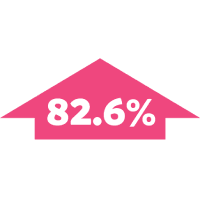
Income will increase significantly, increase or remain similar
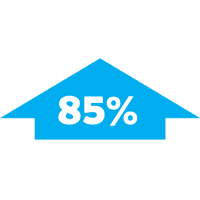
Support from business will increase significantly, increase or remain similar
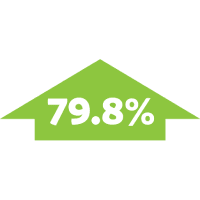
Grants from charitable foundations will increase significantly, increase or remain similar
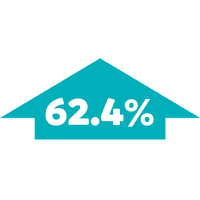
Funding from statutory agencies will increase significantly, increase or remain similar
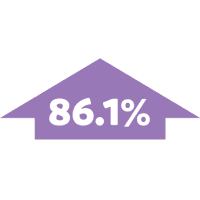
Support from volunteers will increase significantly, increase or remain similar
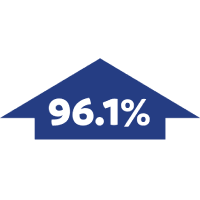
Partnership working will increase significantly, increase or remain similar
The North East’s sector is buoyant and overall confident about the coming years, and in line with other indicators, more positive about partnership working and relationships with business than the national average, albeit less optimistic about the trajectory for statutory funding.
Social Impact
Social Impact themes change over time North East
Further strengthening the evidence that the VCSE in the North East is heavily focused on addressing acute social need, the proportion of organisations which believe they have an impact in improving people’s lives and outcomes are substantially higher in the region than for the whole of England and Wales.